Introduction and Purpose
Imagine if we could highlight markets with interesting trading activity, providing users with a range of strategic opportunities. This could assist users in determining WHAT to trade by offering trade ideas based on price movements and crowd behavior.
Such a feature would drive our existing favorites lists. Users could then generate their own watchlists based on markets that meet their criteria.
Competitor Analysis
After analysing six competitors, I found that they offer similar experiences on both mobile and web platforms. Each offers trading suggestions based on market performance and the ability to create and manage multiple watchlists.
Our trading platform lacks these features as it does not offer trading suggestions or the ability to manage multiple watchlists.
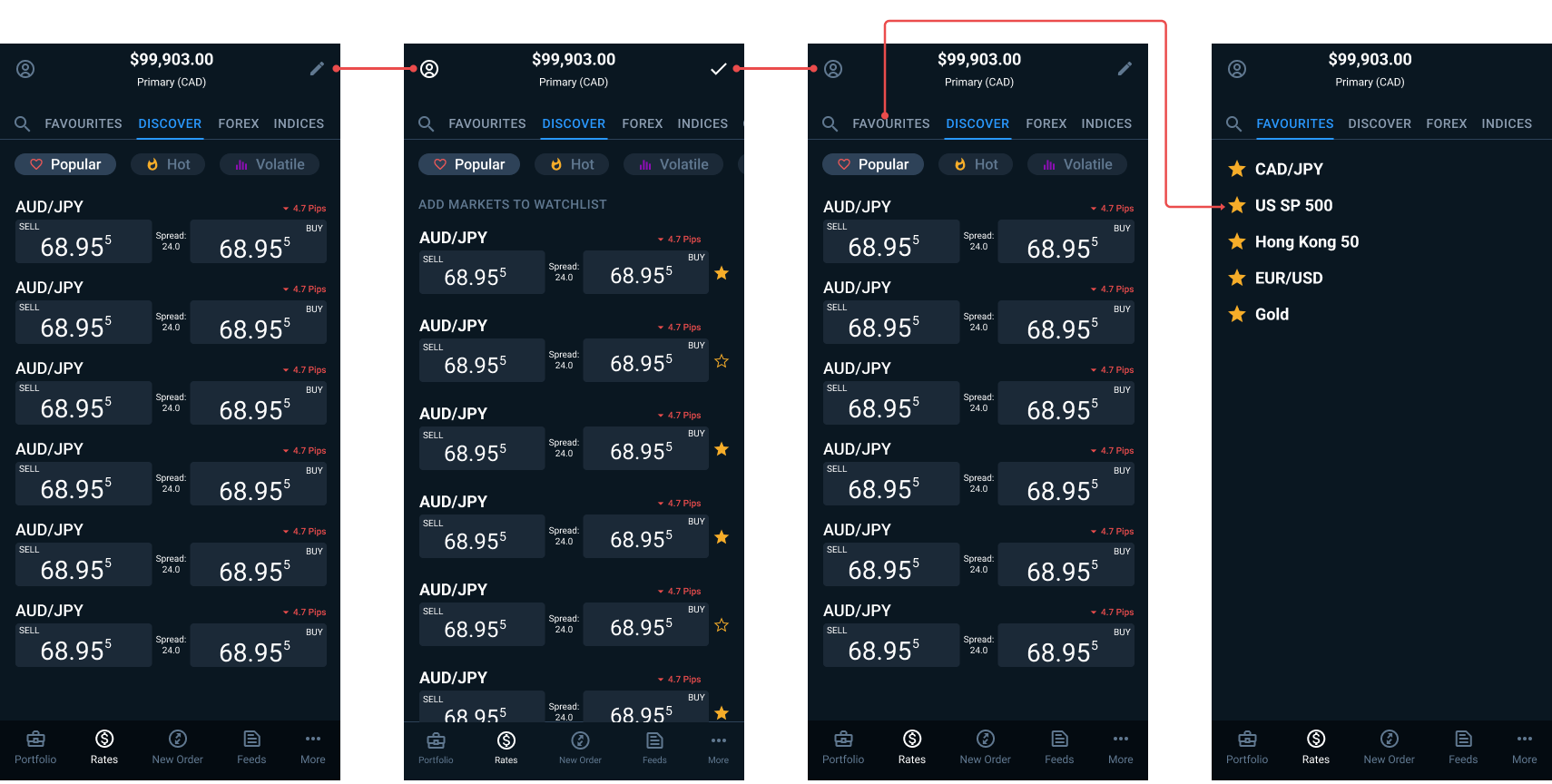
I've come to understand that the scope of this project goes beyond simple enhancements to our favorites list. It should structured into two interrelated phases. The first phase focuses on identifying new markets for traders, while the second one enables traders to add, and manage these newly discovered markets within their favorites lists.
Exploratory sessions with users
I conducted a benchmark test using usertesting.com to understand the existing functionality. Participants included four users from our platform, Oanda, and three users each from IG, Capital.com, and Forex.com. I mainly wanted to know:
- Do they have one or multiple watchlists?
- Do they filter markets by categories like Trending, Popular, New, Recently Traded, or Most Volatile?
- Summary of Benchmarking Findings
- Our users want to be in control or their trading. It is important for the users that the first thing they land on when they open the app to be their watchlists with saved markets. Users want to see their watchlists with saved markets immediately when launching the app, enabling them to make quick trading decisions.
- Typically, traders have one watchlist for forex trading, and create one to three watchlists for stocks and other markets.
- Suggested categories of markets are useful to give traders insight into the activities of other traders.
- Traders prefer to do their own research and cross-reference it with our expert suggestions.
Solutioning
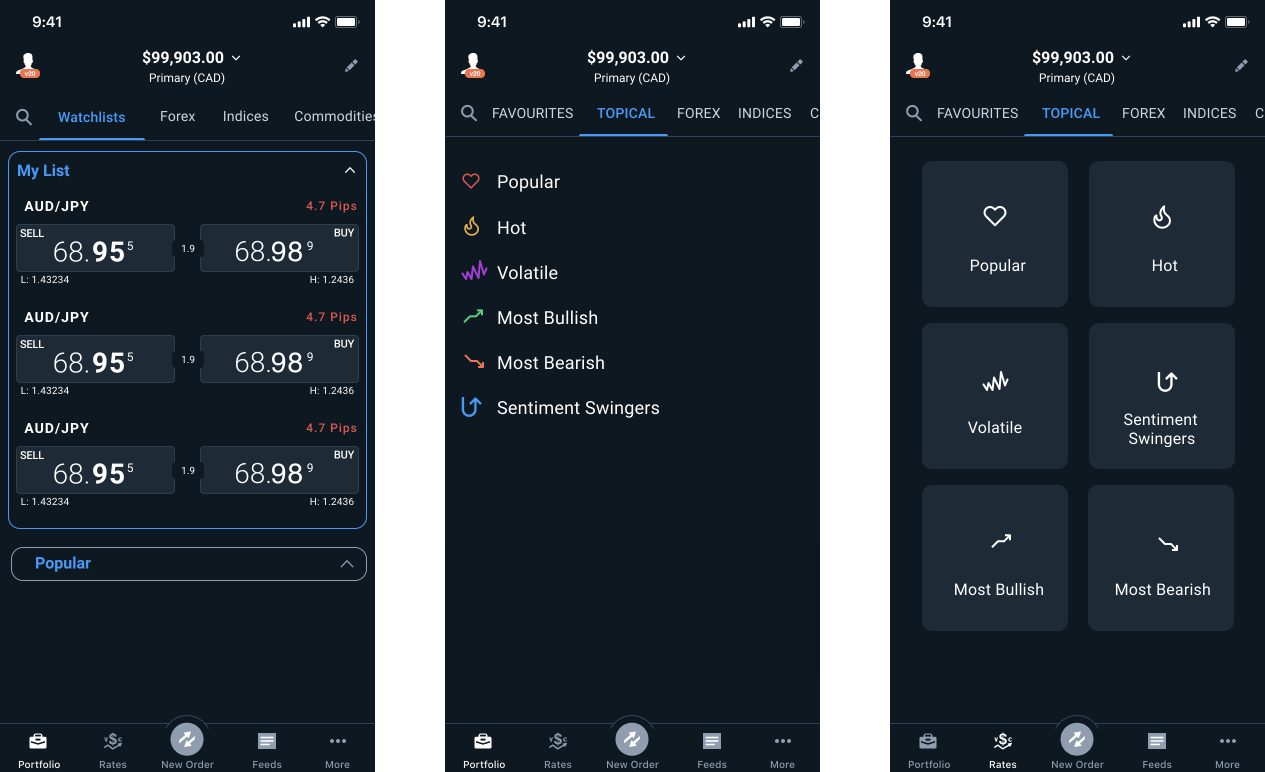
To find the best solution, I brainstormed various ideas. One concept involved maintaining a single watchlist, named "Favorites," which would consolidate all markets, both existing and new, within the same tab bar.
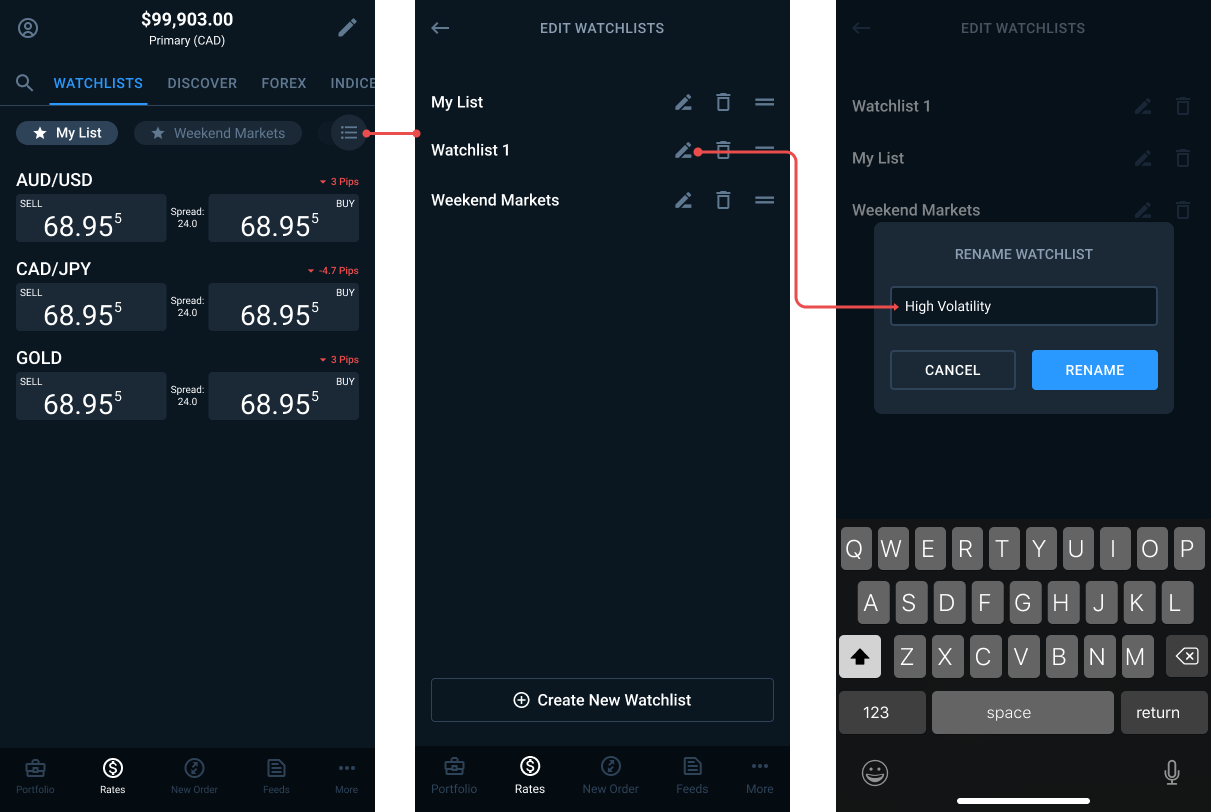
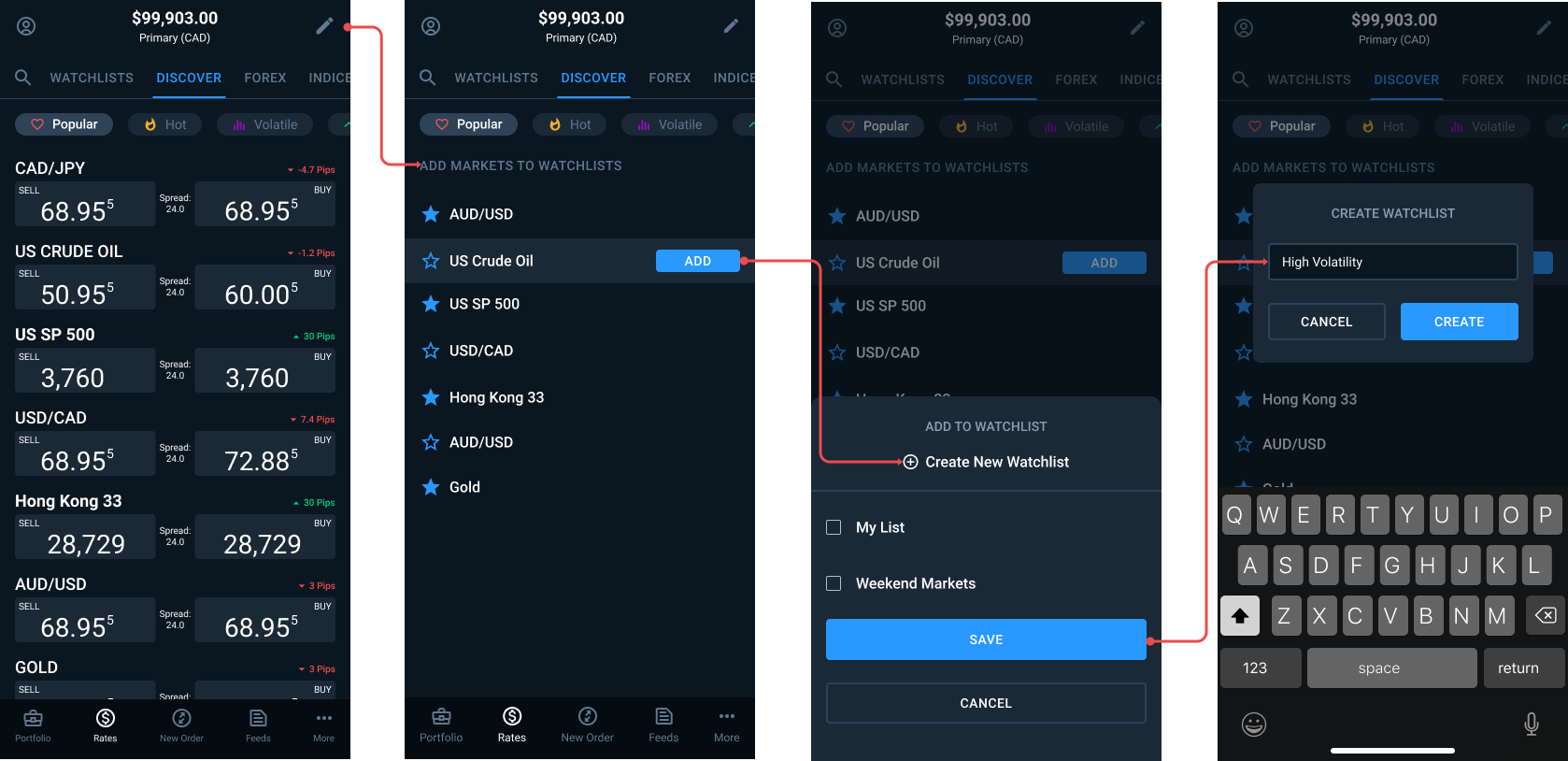
Another idea explored the possibility of creating multiple watchlists, allowing users to organize and manage distinct lists based on their preferences.
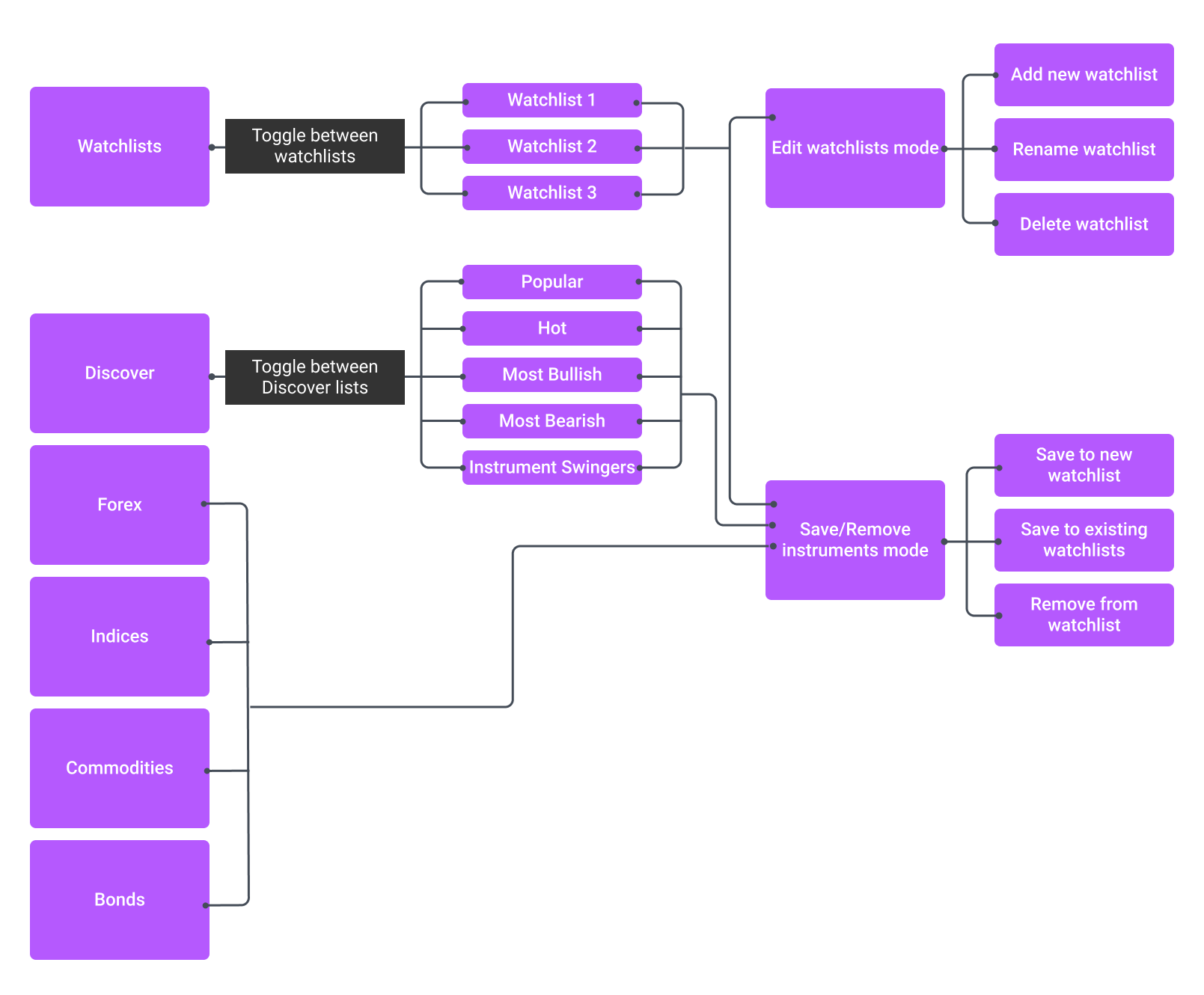
I created a flow diagram to illustrate the user interface structure for discovering new markets and managing watchlists. The diagram shows how users can toggle between multiple watchlists, add or remove instruments, and navigate through different market discovery lists such as "Popular" or "Hot". It also outlines the functions available in edit mode, including renaming, adding, and deleting watchlists.